
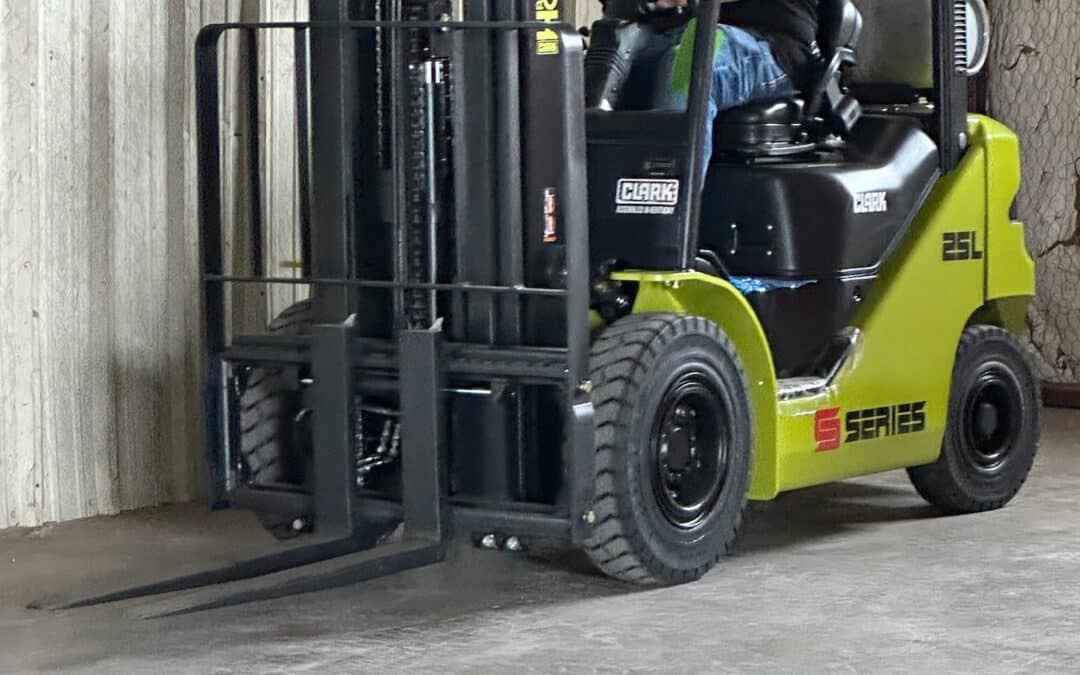
The cushion vs. pneumatic tire decision is one of the most consequential specification choices a buyer makes, and it is also one of the most frequently made on the wrong basis. Surface type, load profile, and operating environment all determine which configuration actually performs. Forklifts for sale in Odessa, TX, buyers operating across both warehouse floors and outdoor yard surfaces face this decision more directly than most, because the Permian Basin operating environment rarely fits neatly into one category.
Cushion Tires: What They Do Well and Where They Fall Apart
Fork trucks for sale in Odessa with cushion tires are optimized for smooth, flat, indoor surfaces. The lower ground clearance and tighter turn radius are assets on sealed concrete, and cushion tire equipment consistently delivers lower cost per operating hour than pneumatic alternatives in contained warehouse cycles.
Where cushion tires fail is on any surface that is not flat and even. Outdoor yards, gravel areas, and cracked asphalt introduce impact loads that cushion tires are not designed to absorb. Running cushion equipment on these surfaces accelerates tire wear, stresses the chassis, and reduces operator comfort across a full shift.
Pneumatic Tires: The Outdoor and Mixed-Surface Standard
Pneumatic tires, whether air-filled or solid foam-filled, are the correct specification for outdoor travel, uneven surfaces, and mixed indoor and outdoor cycles. The added ground clearance and shock absorption protect both the equipment and the load on surfaces where cushion tires would be operating outside their design envelope. Fork trucks for sale in Odessa used in oilfield supply yards and outdoor staging areas almost universally require pneumatic specification regardless of whether some portion of the cycle also includes indoor work.
The Mixed-Application Problem That Odessa Operations Face
Operations running equipment across a finished warehouse floor and an adjacent outdoor yard are the hardest to specify correctly. Forklifts for sale in Odessa, TX buyers in this situation have two practical options: dedicate separate equipment to each environment, or accept the performance compromise of pneumatic equipment used indoors.
The second option is almost always more practical for smaller operations. Pneumatic equipment on smooth concrete performs adequately. Cushion tire equipment outdoors creates real maintenance and operational problems. When forced to choose one specification for a mixed application, pneumatic is the safer default.
Capacity and Load Center Interact With Tire Type
A cushion tire forklift rated at 5,000 lbs on a 24-inch load center operates differently on an uneven surface than the static rating implies. Surface irregularity introduces dynamic load shifts that flat-floor ratings do not account for. Fork trucks for sale in Odessa buyers lifting near rated capacity outdoors should apply a working capacity derating that reflects actual surface conditions.
Precision Material Handling stocks cushion and pneumatic configurations across its inventory, including new Tailift and EP Equipment units in electric, LPG, and internal combustion options alongside evaluated used equipment. The right specification starts with understanding the surface, the load, and the cycle before a model number is discussed.
The Wrong Tires Do Not Just Wear Out Faster. They Change How the Equipment Performs Every Single Day.
Operations running cushion tires in outdoor yards or pneumatic equipment on fragile warehouse floors carry a hidden cost in accelerated wear and equipment stress that accumulates across every operating hour. Precision Material Handling has decades of experience matching equipment specification to application requirements across the full range of tire configurations and capacity classes.
The forklift pages on this site detail every available unit in both cushion and pneumatic configurations with capacity ratings, lift height options, and power source specifications. Buyers who want to confirm the right tire specification before committing to a purchase will find the data here alongside the ability to request a direct conversation with the team.
FAQs
Q: What is the main difference between cushion and pneumatic forklift tires?
A: Cushion tires are solid rubber for smooth indoor surfaces, while pneumatic tires are air or foam-filled for outdoor and mixed-surface use with better shock absorption and ground clearance.
Q: Can I use a cushion tire forklift outdoors in Odessa?
A: Technically yes, but uneven or gravel surfaces accelerate tire wear significantly and expose the chassis to impact loads outside the equipment’s design parameters.
Q: Which tire type is better for an Odessa oilfield supply yard?
A: Pneumatic tires are the correct specification for oilfield supply yards and any outdoor application where surface conditions are variable or uneven.
Q: Does tire type affect forklift rated capacity?
A: Tire type does not change the data plate rating, but surface conditions that pneumatic tires handle better can affect safe working capacity under real operating conditions.
Q: Does Precision Material Handling carry both cushion and pneumatic tire forklifts?
A: Yes. Precision Material Handling stocks new and used forklifts in both configurations across multiple capacity classes and power source options.